
From Ancestors to Collectors—and the Long Journey Home
Customary preservation predated the overseas market, including remembrance of cherished relatives and treatment of defeated enemies in warfare and diplomacy.
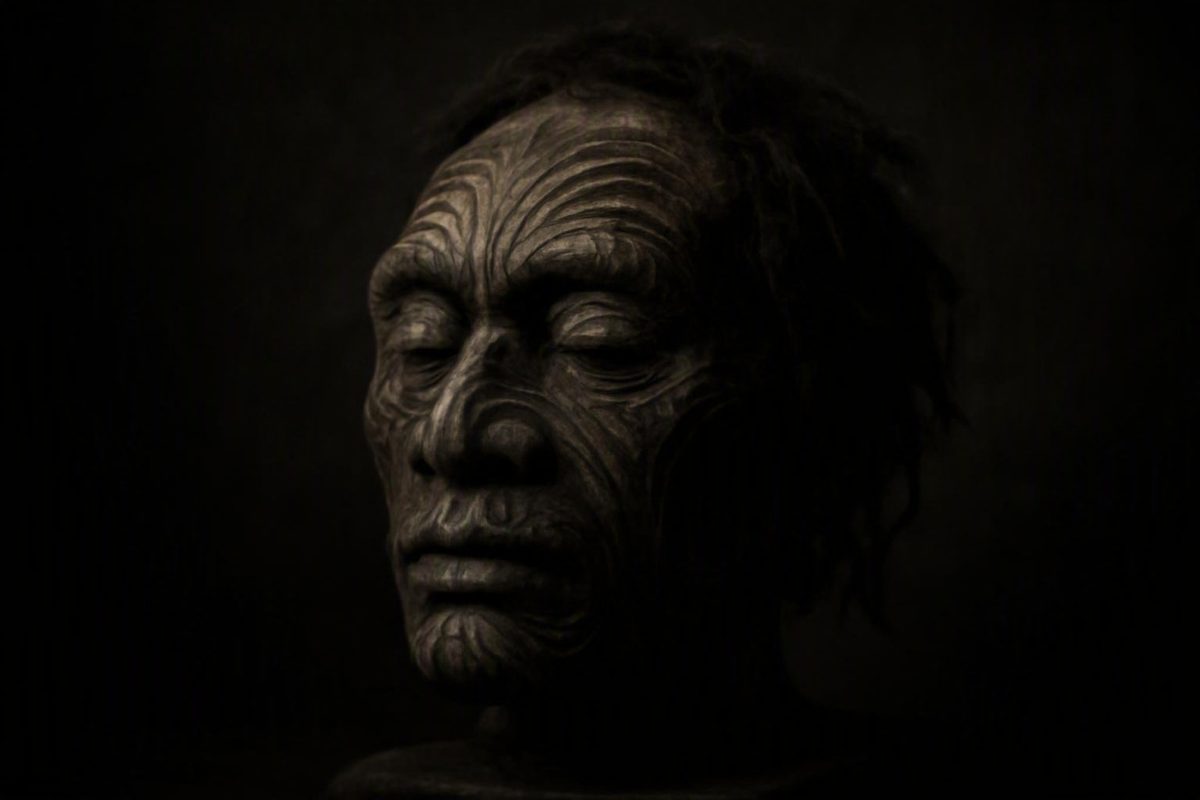
The search phrase “moko mokai preserved Māori heads” refers to preserved Māori ancestral heads bearing facial tā moko. Their history is sometimes presented through the language of curiosities, tattoo collecting, or the macabre. That framing begins in the wrong place. The people concerned are ancestors whose moko carried deeply personal identity and history.
Their journey encompasses customary remembrance and conflict, European-driven commerce, international collecting, the loss of names and provenance, and Māori-led efforts to bring ancestors home.
Content note: This article discusses human remains, colonial collecting, and violence. It avoids graphic or sensational detail and does not reproduce identifiable images of ancestors.
A terminology and dignity note: toi moko, mokomokai, and “moko mokai”
Several terms and spellings appear in historical and contemporary writing, including toi moko, mokomokai, mokamokai, and the separated form moko mokai. Te Papa identifies toi moko as also being known as mokomokai or mokamokai.
This article principally uses toi moko because that term appears in contemporary repatriation material from Te Papa and Berlin’s Ethnologisches Museum. This is not a claim that one expression is universally preferred by every iwi, hapū, Māori authority, or individual speaker.
The distinction between tā moko and toi moko is essential:
- Tā moko is the living Māori practice and tradition of marking the face or body.
- Moko can refer to the resulting markings and the identity or history they embody.
- Toi moko are ancestral remains bearing facial moko.
These concepts are related, but they are not interchangeable. Tā moko did not exist in order to create the ancestral remains later collected by museums. The ancestor was first a living person whose moko formed part of a lived identity. Preservation and removal came later.
Language affects how that person is understood. Terms such as “artifact,” “specimen,” “curiosity,” and “collectible” are relevant when examining the classifications imposed by traders, collectors, scientists, auction houses, and museums. They should not become the article’s own description of the ancestors.
“Human remains” is accurate in many administrative contexts, but it can sound detached. “Ancestors” or “ancestral remains” better conveys the relationships and responsibilities at stake. In an ABC News account, Te Papa repatriation specialist Te Herekiekie Herewini emphasized the distinction in the words: “Not artefacts. Ancestors.”
That distinction changes the questions worth asking. Instead of beginning with “How was this object made?” or “How rare is it?”, a respectful inquiry asks:
- Who was this person?
- What did their moko communicate within their community?
- Why and under what circumstances were they preserved?
- How did they leave their people and place?
- Who has responsibility for their care?
- What might a meaningful return involve?
In many cases, surviving documentation cannot answer those questions. That absence is not merely an archival inconvenience. It reflects the damage caused when people were detached from genealogy and place, assigned catalogue descriptions, and transferred through commercial or institutional networks.
What facial tā moko communicated
Tā moko is a sacred and highly personal Māori practice. Depending on the person and context, moko may express ancestry, identity, status, affiliation, personal history, achievement, and significant life events. It can make visible relationships that cannot be reduced to decoration or individual taste.
Facial moko could also make a person recognizable, including after death. That does not mean moko functioned as a simple written code that any observer could translate by matching every line to a fixed definition. An outsider cannot responsibly “decode” a moko from appearance alone.
Historical accounts describe broad differences in placement: men’s facial moko generally extended over more of the face, while women’s moko was often concentrated on the lips and chin. These are broad patterns rather than universal rules. They should not be applied to every person, community, or period, and visible markings alone cannot establish the identity or status of an unknown ancestor.
Traditional tā moko methods were physically and artistically distinct from lightly puncturing the skin’s surface. Practitioners used chisels to cut or carve grooves into the skin and introduced pigment, giving the work a carved quality. An official cultural overview describes bone chisels and grooved markings while presenting contemporary moko as an expression of identity, commitment, and cultural pride rather than a vanished historical custom (Tourism New Zealand’s overview of tā moko).
That living continuity matters. Tā moko should not be discussed as an extinct tradition whose only surviving evidence lies in museum repositories. Contemporary practitioners work within a revitalized and visible practice, and Māori wear moko as expressions of genealogy, identity, belonging, commitment, and pride. Living moko is not a reenactment of a frozen past.
Nor can moko be separated from the person who bore it. Collectors might have treated facial patterning as evidence of artistic rarity or commercial value. Within a Māori framework, however, those markings could embody personal history and relationships. Removing a toi moko from community therefore did more than relocate physical remains. It separated the ancestor from the people, knowledge, place, and responsibilities through which the moko could be understood.
This is why an unidentified toi moko cannot be adequately described through visual inspection. The pattern may display extraordinary technical decisions, but it cannot by itself restore a name, iwi, hapū, or life story. A label such as “Māori tattooed head” compresses a person into an ethnic category and a bodily feature. What is absent may be precisely the information that once gave the moko meaning.
For tattoo-history readers, this creates an important ethical boundary. Technique and artistic knowledge matter, but studying the lines solely as design repeats part of the collector’s mistake. The bearer cannot be reduced to a reference sheet, flash source, or collection of motifs.
Customary preservation before the overseas market
The preservation of some heads did not originate as a commercial service for European buyers. Historical accounts describe customary purposes that existed before the overseas market, including remembrance of cherished relatives, ceremony, warfare, diplomacy, and the treatment of defeated enemies. These circumstances must be kept distinct.
Some cherished ancestors were reportedly kept securely within their communities and brought out on significant occasions. Their continuing presence could support remembrance and relationships between the living and the dead. Within that setting, preservation did not transform the ancestor into an alienable collection object. The person remained situated within genealogy, ceremony, place, and community responsibility.
The heads of enemies occupied a different category. Accounts associate them with victory and wartime display, but also with negotiation, exchange, diplomacy, and peace-making. A defeated enemy and a cherished relative did not have the same status or necessarily receive the same treatment. Combining them into one undifferentiated practice erases the moral and political distinctions that shaped their care.
Even these categories are not complete or universal. Customary practice varied among iwi and hapū, across regions and historical periods, and according to individual circumstances. Much of the surviving written record was created or filtered through outsiders who may not have understood what they witnessed. Broad historical summaries cannot substitute for community-specific knowledge.
Descriptions of preservation also vary. They mention, in different combinations, heating or steaming, smoking, drying, sealing, and treatment with oil. There is no secure basis for presenting one procedure as universal. A high-level description is sufficient for understanding the history; detailed reconstruction risks sensationalizing the ancestors while suggesting a degree of certainty the evidence does not provide.
Most importantly, the existence of customary preservation cannot reveal why a particular unidentified person was preserved. An unknown toi moko should not automatically be described as:
- a chief or warrior;
- a cherished relative;
- a defeated enemy;
- a prisoner or enslaved person;
- a person prepared in response to overseas demand; or
- someone exchanged for a weapon.
These are possibilities found in broad historical accounts, not facts about every ancestor. Facial moko may provide avenues for culturally informed research, but visual features alone cannot resolve questions of status, preservation, or later exchange.
The distinction between customary preservation and colonial commerce is also more complex than a simple division between “before” and “after” European arrival. Customary relationships, warfare, diplomacy, internal Māori decision-making, access to new weapons, settler demand, and foreign shipping interacted over time. The decisive change was the growth of an outside market that encouraged buyers to detach ancestral remains from their relationships and assign them exchange value.
The same remains could consequently be understood in profoundly different ways: as an enemy retained within a political relationship, as an ancestor carrying tapu, or as an ethnographic item wanted by a collector. Recognizing those incompatible meanings is essential to understanding what commerce changed.
How European demand turned ancestors into commodities
European acquisition of Māori ancestral remains began during the period of James Cook’s Pacific voyages. Te Papa dates European collecting and theft of human remains from Aotearoa New Zealand to Cook’s first voyage in 1769. It also records that toi moko became increasingly visible as trade items following the arrival of sealers and whalers in the early nineteenth century (Te Papa’s historical account of collecting).
A toi moko might be sought as a curiosity, artwork, ethnographic example, scientific or medical material, private possession, or museum acquisition. Each classification turned a person into something that could be priced, exchanged, catalogued, examined, displayed, and possessed.
Those categories stood in tension with Māori understandings of ancestry, identity, tapu, and community responsibility. Even where a toi moko was the remains of an enemy rather than a relative, that did not make the person culturally equivalent to a transferable museum object. The ancestor remained situated within relationships created by conflict, status, negotiation, and historical circumstance.
The expanding market coincided with intertribal conflict and demand for European firearms and ammunition. Toi moko became one route through which the participants in these exchanges pursued different aims.
Te Papa connects the height of the trade with the Musket Wars and qualifies that Māori participants mainly traded enemies’ remains rather than members of their own families. “Mainly” matters: it challenges the misleading suggestion that Māori indiscriminately sold cherished relatives, but it should not be converted into an absolute rule.
Some historical accounts report that prisoners or enslaved people were tattooed, or that people were killed, to satisfy commercial demand. Berlin’s Ethnologisches Museum includes such reports in its explanation of the nineteenth-century trade. These should be understood as reported historical patterns, not assumptions about any unidentified person. The museum did not claim that either of the two ancestors in its own care was a prisoner, an enslaved person, or someone killed for commerce.
The trade is sometimes reduced to formulas claiming that a specified number of heads purchased one firearm. Such formulas are memorable but unreliable as general rules.
Once an ancestor passed through ships, dealers, soldiers, physicians, collectors, auction houses, or museums, records might retain only the purchaser’s name and an acquisition date. The ancestor’s own name, iwi, hapū, and place of origin could disappear.
Even a recorded acquisition location may not have been the ancestor’s home. A dealer’s description could be incomplete, mistaken, or calculated to increase value. Transfers between collectors and museums created further opportunities for error.
The result is a painful asymmetry. Collections may document who bought, sold, donated, or registered an ancestor while saying almost nothing about who that ancestor was. Provenance research must therefore do more than reconstruct a sequence of possession. Its deeper purpose is to recover, where the surviving evidence permits, the relationships that commerce erased.
A careful timeline of trade, prohibition, and decline
The commercial history is best understood as a sequence rather than a single beginning and ending. Dates mark changes in visibility, market access, and regulation, but they do not define a perfectly bounded era.
- 1769–1770: Members of Cook’s first expedition acquired Māori human remains. Sources differ over the precise number and circumstances of early acquisitions, including whether particular transactions should be described as purchases or coercion.
- 1807: Two toi moko were recorded as being sent to botanist Joseph Banks by the governor and a former governor of New South Wales.
- Early 1800s: Toi moko appeared more visibly as trade items alongside the arrival of sealers and whalers.
- 1820s: Many accounts identify this decade as the period of greatest commercial intensity, closely connected with the Musket Wars and demand for European firearms and ammunition.
- April 1831: New South Wales Governor Ralph Darling prohibited the Sydney trade.
- Late 1830s and 1840s: Commerce diminished but did not stop everywhere at once. Trade continued in some regions, and foreign ships still acquired toi moko.
Te Papa supports the 1769, 1807, early-nineteenth-century, 1820s, late-1830s, and 1840s chronology, while retaining qualifications such as “mainly,” “about,” and “at least” where the surviving record is not exact (Te Papa’s chronology of collection and trade).
The precise “peak” varies by account. Some describe the early nineteenth century broadly, some emphasize the 1820s, and others use the range 1820–1831. These descriptions are compatible at a general level and should not be flattened into a falsely exact starting or ending date.
Darling’s April 1831 prohibition constrained Sydney, an important commercial outlet, but it did not create an immediate worldwide end to acquisition or export. Enforcement, alternative routes, regional conditions, and continuing foreign demand complicate any clean cutoff. The signing of the Treaty of Waitangi in 1840 likewise should not be represented as the moment when all trade definitively stopped.
An archived Students of the Unusual compilation shows how older secondary coverage described the 1831 prohibition and a rapid subsequent decline. Because the page combines news copy and historical excerpts without consistently marking their boundaries, it is evidence of past popular coverage rather than a controlling authority on disputed history or tikanga.
The decline of the firearms-linked market did not end foreign collecting. Scientific institutions, physicians, military collectors, private enthusiasts, and museums continued to seek Māori and Moriori ancestral remains during the nineteenth century. The history therefore shifted from a highly visible trade in toi moko into a wider colonial system of collecting and classification.
Collectors, museums, and the loss of provenance
The early trade associated with firearms was followed by scientific, medical, private, and museum collecting.
Te Papa reports that scientific collecting of skeletal remains in Aotearoa New Zealand began in the 1850s and peaked in the 1870s amid overseas demand. Collectors and museum employees removed many Māori and Moriori ancestral remains from burial places, then exchanged or sold them overseas without community consent.
These routes make present-day research difficult. A museum may have acquired an ancestor from another institution rather than directly from Aotearoa New Zealand. Its catalogue might identify a donor while omitting the earlier collector.
Horatio Gordon Robley illustrates the monetary logic imposed on toi moko. A British soldier and collector with an enduring interest in moko, he assembled a substantial collection and attempted to sell it. The supplied accounts conflict over the collection’s exact size, the number included in particular offers or transactions, the buyer’s role, and whether quoted prices covered only toi moko or also other Māori material.
Those contradictions are a reason for caution. Sources may be counting the collection at different moments or combining unlike transactions. What can be said securely is that collectors assigned monetary value to the ancestors and that Robley-associated toi moko subsequently entered museum networks.
Commercial treatment persisted long after the Musket Wars. Te Papa reports that toi moko still appeared in auction catalogues during the 1980s and 1990s. An academic case study describes one toi moko offered at auction late in the twentieth century, withdrawn from sale, and eventually returned for reburial (Trafficking Culture’s toi moko case study).
Auction history shows why “collecting” is not a neutral word. A catalogue may assert or imply legitimate possession while leaving unanswered whether the person offering the ancestor had valid authority to do so. In many cases, incomplete provenance makes the circumstances of acquisition—and questions of authority or consent—impossible to establish confidently.
Museum catalogues may reproduce the same imbalance. Common gaps include:
- the ancestor’s name;
- iwi and hapū affiliation;
- where the person lived or died;
- whether preservation had a customary or commercial purpose;
- the circumstances of removal or exchange;
- the identities of intermediaries;
- whether an acquisition was coerced, purchased, gifted, excavated, or stolen; and
- the complete route between Aotearoa New Zealand and the present institution.
Errors can also become entrenched through repetition. Historical collectors often used broad racial or geographic categories. Later museum staff might copy those descriptions because no other documentation was available. Correcting a catalogue therefore requires more than reading an institution’s own records; Māori knowledge and careful evaluation of the archive are also necessary.
No reliable present-day total of overseas holdings can be established from the supplied evidence. Historical counts are incomplete, private collections are difficult to trace, institutional terminology varies, and repatriation continues. A fixed total would quickly become obsolete and could falsely suggest that every ancestor has been located.
Repatriation: return, research, and culturally appropriate care
Repatriation is sometimes summarized as the physical movement of ancestral remains from an overseas museum to Aotearoa New Zealand. That journey matters, but the documented cases show that return can involve more than transport.
Since 2003, the New Zealand government has commissioned the Museum of New Zealand Te Papa Tongarewa to support the repatriation of Māori ancestral remains, according to Berlin’s account of its return process. Individual cases may include institutional discussions, provenance research, a formal handover, ceremony, transport, restricted care, and continuing investigation. These are possible components rather than a universal eight-stage procedure.
Returned toi moko may be held in a dedicated, nonpublic repository while available evidence about their origin is assessed. Restricted access is not adequately understood as ordinary museum secrecy. In the documented Te Papa and Berlin cases, non-display forms part of respectful care for ancestors whose identities and communities may remain unknown.
The return of two toi moko from Berlin demonstrates this distinction. A ceremony took place at the Ethnologisches Museum on 13 October 2020, even though the ancestors’ identities, exact origins, and initial routes to Europe remained unresolved. One had been acquired for the museum in London in 1879, and the other had been donated in 1905; neither associated collector had personally brought the ancestor from Aotearoa New Zealand (the Ethnologisches Museum’s account of the return).
The ceremony included karanga, karakia, mihi, waiata, speeches, and the signing of a handover agreement. These practices should not be reduced to colorful additions to an administrative event. In the museum’s account, they accompanied the acknowledgement and return of the ancestors. The toi moko were then intended for Te Papa’s dedicated repository while investigation into their origins continued.
The Berlin case also demonstrates that return need not wait until one specific historical abuse can be proven. The museum did not know whether either person had been a cherished relative, defeated enemy, prisoner, enslaved person, or victim of commercial preparation. It could not reconstruct how the ancestors first reached Europe. That uncertainty did not prevent the institution from deciding to return them.
At the same time, words such as “loan,” “custody,” “handover,” and “repatriation” should not be treated as automatic legal synonyms. A geographic return may also occur before an ancestor’s connection to a particular iwi, hapū, community, or place can be established.
Archived secondary coverage from 2000 reported that the South Australian Museum had agreed to transfer five toi moko to Te Papa on a long-term loan. The terminology is important: the report described a loan, not an unequivocal permanent transfer (the archived 2000 report).
Accordingly, these outcomes should not be collapsed into one another:
- long-term loan;
- temporary or ongoing care;
- institutional handover;
- return to Aotearoa New Zealand;
- return to a connected community; and
- reburial or another culturally determined outcome.
The supplied evidence does not establish one universal legal or cultural pathway governing all cases. Precise language protects against overstating what an institution has done. It also recognizes that return is relational as well as geographic. Moving an ancestor across a national border matters, but reconnection with people and place may require years of research—or remain impossible where records have erased too much.
Living knowledge, ethical research, and what remains unknown
Toi moko can carry genealogical, cultural, historical, and artistic knowledge. Contemporary Māori practitioners and researchers may approach them as ancestors whose moko embodies the decisions of earlier artists. That differs fundamentally from treating them as a detached archive of tattoo designs.
Reported research involving 200 toi moko cared for at Te Papa has examined how ancestral practitioners adapted moko to individual facial anatomy and developed recognizable artistic approaches. The figure describes the group involved in that reported work; it does not demonstrate that all 200 were repatriated or establish a current total of Te Papa’s holdings (reporting on Te Papa’s toi moko research).
This work has been discussed alongside the growing visibility and revitalization of tā moko. Contemporary practitioners may study how earlier artists balanced line, facial structure, movement, and composition. The ancestors are not technical samples available for unrestricted inspection.
Respectful research requires Māori leadership, cultural protocol, human dignity, and restricted access where appropriate. Academic or artistic interest alone does not establish an entitlement to view, photograph, sample, scan, or publish ancestral remains. Even technically non-invasive work may conflict with tikanga or the expectations of a connected community.
The supplied evidence does not establish universal rules for:
- photography or filming;
- online image publication;
- three-dimensional scanning or digitization;
- scientific sampling;
- genetic analysis;
- facial reconstruction;
- access by tattoo practitioners;
- reproduction of moko patterns; or
- consent for academic publication.
Appropriate authority and process may depend on provenance, the institution’s arrangements, the purpose of the work, and the views of connected iwi or hapū. Where an ancestor’s community is unknown, the absence of an identifiable decision-maker should not be treated as automatic permission.
Research must also remain honest about what cannot yet be recovered. For many toi moko, unresolved questions include:
- the person’s name and life history;
- their iwi or hapū;
- their home or place of death;
- whether preservation occurred for remembrance, warfare, diplomacy, commerce, or another reason;
- whether commercial pressure changed the circumstances of preservation;
- who first removed or exchanged the ancestor;
- the route through ships, dealers, collectors, and museums;
- whether catalogue descriptions are accurate; and
- how many ancestors remain overseas, particularly in private or poorly documented collections.
Scientific or visual analysis cannot answer every question. Facial patterning may support culturally informed comparison, but it cannot independently restore genealogy.
For editors, researchers, museums, and tattoo-history publishers, practical restraint is part of accuracy. Avoid identifiable images of toi moko unless appropriate authorization and cultural context have been established. Do not reproduce moko patterns as borders, logos, backgrounds, flash, or decorative motifs detached from their bearer. Avoid procedural detail that turns ancestors into spectacle. Captions and catalogue descriptions should identify people as ancestors rather than objects.
Frequently asked questions
Are “moko mokai,” “mokomokai,” and “toi moko” the same thing?
The supplied sources use these expressions for the same broad category: preserved Māori ancestral heads bearing facial tā moko. Te Papa lists toi moko, mokomokai, and mokamokai, while moko mokai appears in older and popular coverage.
This article uses toi moko because it appears in contemporary repatriation contexts. The evidence does not establish it as the sole term preferred by every iwi, hapū, or Māori authority. When working with a particular community, follow that community’s usage.
Were all toi moko created for trade with Europeans?
No. Historical accounts describe customary preservation before the overseas market, including remembrance of cherished relatives and the treatment of defeated enemies in warfare, diplomacy, negotiation, and peace-making.
European demand later transformed some ancestral remains into commercial goods. The original purpose of every unidentified toi moko cannot be established, so no person should automatically be classified as a relative, enemy, chief, prisoner, or victim of commercial preparation.
How were toi moko connected to muskets and the Musket Wars?
During the early nineteenth century, Māori groups sought European muskets and ammunition amid escalating intertribal conflict. Toi moko became one of the things exchanged through that market, which was particularly intense during the Musket Wars.
The relationship should not be simplified into a fixed price or universal transaction. Not every toi moko was exchanged for a firearm, and no dependable rule establishes that a particular number always purchased one musket.
Why are repatriated toi moko generally not displayed publicly?
They are ancestors rather than ordinary collection objects. In the documented institutional accounts, restricted and nonpublic care protects their dignity while research into identity, origin, and possible community connections continues.
Non-display does not necessarily mean the ancestors have been forgotten or concealed from accountability. It can constitute an active form of respectful care while their histories and relationships remain unresolved.
Is a museum loan or custody transfer the same as permanent repatriation?
Not necessarily. “Loan,” “custody,” “handover,” “return,” and “repatriation” may describe different arrangements, and their legal consequences depend on the governing agreement and jurisdiction.
Return to Aotearoa New Zealand, care at Te Papa, reconnection with a community, and reburial are also related but distinct outcomes. Precise language matters because an ancestor’s journey cannot be reduced to a change in a museum register.
Toi moko are not unusual tattoo objects that later became controversial museum holdings. They are ancestors whose moko carried identity, genealogy, and history. Their passage through commerce, private collections, auctions, laboratories, and museums explains why return requires more than movement across a border: it requires respectful care, patient provenance work, Māori leadership, and, where surviving evidence permits, reconnection with people and place.