
Calaveras Tattoos: Know Which Skull You’re Choosing
Explore calaveras tattoo meanings, the difference between sugar skulls and La Catrina, and ways to build a design around remembrance and cultural context.
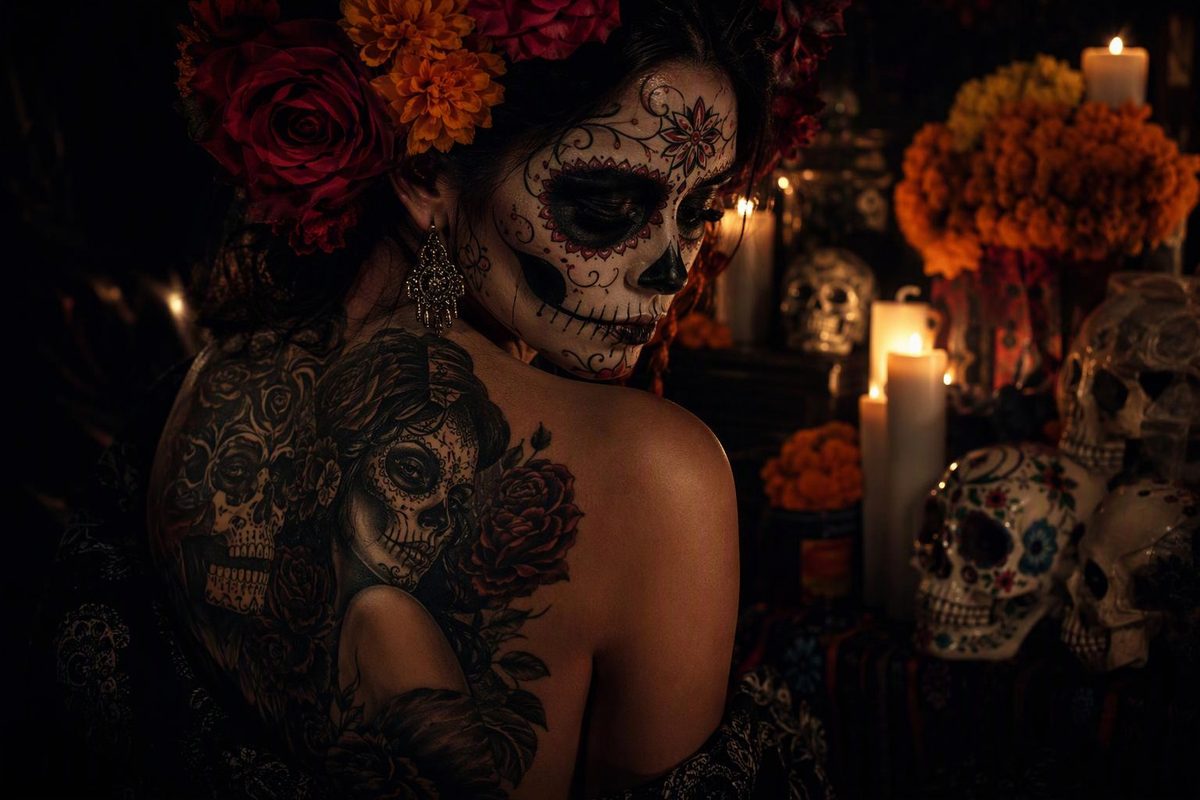
A calaveras tattoo can express remembrance, an acceptance of mortality or a connection to Mexican culture. But a decorated sugar skull and an elegantly dressed skeleton don’t carry exactly the same history. Start by identifying the image, rather than assigning every colorful skull the same meaning.
Calavera means skull in Spanish; calaveras is the plural. In Mexican art, the term also appears in skull-and-skeleton imagery associated with Día de los Muertos. The Smithsonian describes the holiday as an occasion to remember and celebrate departed loved ones—not another version of Halloween. That distinction matters when choosing a tattoo inspired by it. Smithsonian
Sugar skull, skeleton or La Catrina?
These related images offer different starting points for a tattoo:
- A sugar skull: A decorated skull based on the confections placed on ofrendas, or offering altars, and graves. Mexic-Arte Museum describes colorful icing, foil and names across the forehead among their decorations. A tattoo can translate that ornamental surface into linework and color without pretending the tattoo itself is a traditional offering. Mexic-Arte Museum
- A satirical calavera: A skeleton acting like a living person—dressed up, working or otherwise participating in everyday life. Printmaker José Guadalupe Posada used these figures to ridicule social privilege and powerful people. He did not invent calaveras, but his became especially influential. Arlington Museum of Art
- La Catrina: The fashionable female skeleton associated with Posada’s image of a grinning skull beneath an extravagant hat. She is a particular character, not a synonym for every sugar skull or skull-painted face. Her later history includes Diego Rivera’s 1947 mural Dream of a Sunday Afternoon in Alameda Park, where she stands at the center of the composition. Mathew Sandoval, writing in PBS/The Conversation
If your reference is a living woman with skull makeup and flowers, describe that explicitly to the artist. “Sugar skull,” “Catrina” and “portrait with skull makeup” can lead to quite different drawings.
What the tattoo can communicate
Remembrance has a direct cultural connection. Sugar skulls are used to honor the dead, and examples representing a departed person can carry their name. A name, date or detail associated with someone you loved can make a memorial tattoo specific rather than relying on decoration alone. Mexic-Arte Museum
Mortality need not mean horror. The Smithsonian describes brightly decorated sugar skulls as a whimsical reminder of life’s cyclicality. A smiling skull can therefore suit a design about remembering a life with affection, rather than depicting death as a threat. Smithsonian
Catrina also has a satirical edge. Her fashionable appearance belongs to a history of mocking pretension and privilege. Arlington Museum of Art reads Posada’s skeletons as reminders that nobody is immune to death. Choosing her hat, clothing and pose deliberately can preserve that layer instead of reducing her to a glamorous face. Arlington Museum of Art
These are possible readings, not a universal tattoo code. A wearer may emphasize family, heritage, grief or simply the visual composition. Likewise, don’t treat each icing color or forehead ornament as a fixed message without a source for that particular tradition.
Turn the reference into an artist brief
Choose one clear direction: a frontal sugar skull with a memorial name; a Catrina composition built around an elaborate hat; or an animated skeleton with a satirical pose. These are design prompts, not prescribed traditional meanings.
Then decide what must remain readable. If the name matters most, give lettering priority over extra ornament. If the hat defines the character, leave room for its silhouette. Ask your artist which small curls, teeth and flower details they would simplify at your proposed size, and review healed examples of comparable work. Our guide to different tattoo styles can help you separate the subject from its treatment.
Respect starts with being specific: identify the Mexican source, credit reference artists and explain whether your design is a memorial, a cultural connection or an aesthetic choice. Don’t label it “authentic” merely because it includes a skull and flowers. A useful brief might be: “I want a sugar-skull-inspired memorial for my grandmother, with her name as the focal point—not a Catrina portrait.”