
From Mud to Bloom: Understanding the Meaning Behind Lotus Ink
Its mud-to-bloom journey connects the lotus with resilience, renewal, purity, transformation and spiritual growth. Color and sacred imagery shape context.
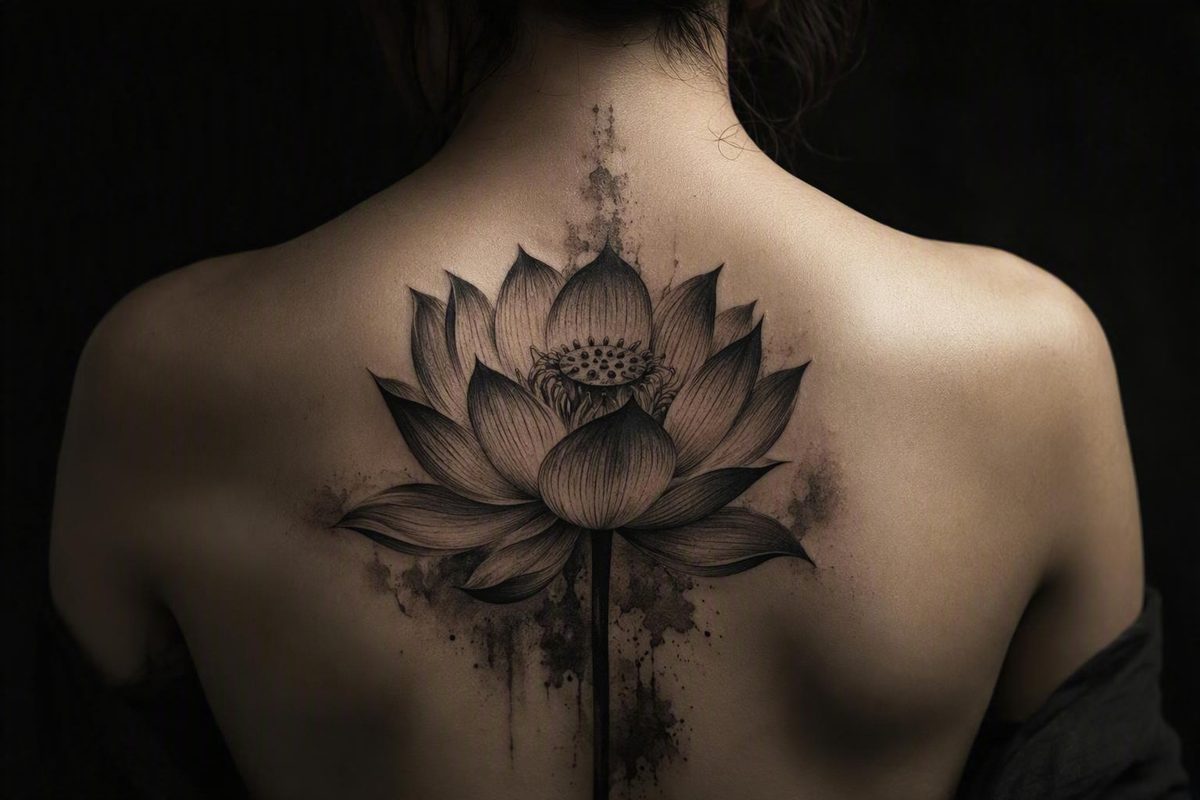
The short answer: what a lotus tattoo usually means
A lotus tattoo most commonly symbolizes resilience, personal growth, renewal, transformation, purity, and rising above hardship. The central image is a flower growing through muddy water before opening at the surface, making it a natural metaphor for emerging from difficult circumstances without being permanently defined by them.
Spiritual awakening and enlightenment are also recurring interpretations, particularly when a design deliberately incorporates Buddhist, Hindu, or other sacred imagery. But there is no single definition shared by every culture, religious tradition, artist, or wearer.
It helps to understand lotus symbolism in three layers:
- Widely shared modern tattoo meanings: perseverance, recovery, transformation, strength, and beginning again.
- Tradition-specific associations: ideas such as purity, detachment, spiritual development, awakening, or enlightenment.
- The wearer’s personal story: the experience, relationship, value, or life chapter represented by the design.
These layers can overlap without being identical. One person may choose a lotus after leaving a difficult relationship without intending any religious message. Another may use the flower to express a spiritual practice. A third may simply appreciate its visual balance and associate it with becoming more grounded.
This flexibility is why “What does a lotus tattoo symbolize?” has no single complete answer. Contemporary tattoo culture regularly connects the flower with resilience and renewal, while broader accounts also associate it with purity and spiritual awakening. HowStuffWorks summarizes these recurring interpretations in its overview of flower-tattoo symbolism.
A compact way to connect intention with possible meaning is:
- Hardship: resilience or perseverance
- Transition: renewal, transformation, or a fresh start
- Reflection: growth, clarity, or wisdom
- Spiritual practice: awakening, devotion, or movement toward enlightenment
These pairings are suggestions, not rules. A tattoo can carry several meanings at once, and the wearer has the strongest claim to its personal significance. Color, style, placement, and companion imagery may influence how other people interpret it, but they cannot turn a convention into a universal definition.
Most importantly, a lotus can be entirely secular. It may commemorate recovery, loss, a change in identity, an achievement, or the decision to start over. Choosing the flower does not automatically declare membership in—or agreement with—a religious tradition.
Why the lotus represents overcoming adversity
The adversity symbolism begins with the flower’s relationship to its environment. A lotus is rooted below the water and grows upward before opening at the surface. In modern tattoo interpretation, that movement produces the familiar mud-to-bloom metaphor: unfavorable conditions are part of the story, but they do not prevent emergence or growth.
That metaphor supports several related meanings:
- Resilience: continuing through difficult circumstances
- Transformation: becoming different through experience
- Renewal: entering a new chapter
- Rebirth: reconstructing a life or identity after disruption
- Purity: remaining connected to one’s principles in an imperfect environment
These are symbolic interpretations rather than botanical laws or universal cultural definitions. The flower does not prove anything about human suffering; instead, it gives people a visual language for experiences that can be difficult to represent.
A lotus may therefore resonate after illness, grief, trauma, recovery, a difficult relationship, career upheaval, or another major transition. These are possible personal uses, not measured claims about why most people choose lotus tattoos. The image can also represent a quieter process, such as rebuilding confidence, abandoning a harmful habit, learning patience, or accepting a change that could not be prevented.
The symbolism does not require treating adversity as if it never happened. The flower’s origin remains visible in the metaphor: growth begins in difficult conditions and continues through them.
For that reason, renewal is not the same as erasure. Beginning again need not mean discarding every memory, lesson, boundary, or scar from an earlier chapter. A lotus can represent carrying what was learned into a different future.
Possible design choices can make parts of that personal story more visible:
- Dark water or sediment may foreground adversity.
- A long stem can suggest an extended process.
- Visible roots may acknowledge origin or continuity.
- An emerging bloom can imply that change is still underway.
- Open space around the flower may emphasize possibility.
- Personal objects or fading imagery beneath it can identify a chapter being left behind.
These are creative options, not established symbolic codes. Viewers will not necessarily interpret them in the same way, so the wearer and artist should decide which details are important enough to make explicit.
A lotus tattoo is also a symbol, not a treatment or guarantee. It may serve as a marker or reminder, but the image itself does not create healing, strength, peace, or closure. Its value comes from the meaning the wearer gives it.
Personal meaning versus religious meaning
A lotus tattoo does not have to be religious. It can represent perseverance, recovery, beauty, transition, self-respect, or a fresh start without making any statement about faith.
Personal meaning and inherited cultural meaning can coexist, but they should not automatically be treated as identical. A wearer’s explanation—“This represents the year I rebuilt my life”—may be sincere and complete even if it differs from the flower’s role in a particular religious setting.
Commercial tattoo guides commonly associate lotus imagery in Buddhist contexts with purity, detachment, awakening, and a path toward enlightenment. These are high-level summaries rather than comprehensive accounts of Buddhist doctrine, and they should not be assumed to apply identically across every Buddhist school, community, or region. Manifest Studio presents these commonly circulated Buddhist associations in its lotus guide.
In descriptions of Hindu contexts, supplied tattoo-oriented sources connect the lotus with purity, divine beauty, spiritual unfolding, prosperity, and depictions of Lakshmi and Saraswati. Here too, the evidence offers a broad overview rather than an authoritative account of diverse Hindu traditions. Conscious Ink summarizes these recurring Hindu associations.
Buddhist and Hindu meanings should therefore be discussed separately. The traditions do not necessarily use lotus imagery in the same way, and a general tattoo guide cannot settle differences among schools, regions, texts, or practitioners.
The available evidence is limited in another important respect: much of it comes from tattoo studios and retailers rather than primary religious texts, museums, botanists, or scholars of religion. Such sources can show which interpretations circulate in contemporary tattoo culture, but they cannot establish one authoritative religious definition. The responsible phrasing is that lotus imagery is associated with certain ideas—not that it always or definitively means them.
Ancient Egyptian references require the same restraint. Some modern tattoo guides connect the Egyptian blue lotus with the sun, regeneration, or rebirth. These associations may inform a contemporary design, but the supplied material does not support an extended historical account.
There is also a terminology issue. One commercial tattoo guide identifies the Asian sacred lotus as Nelumbo nucifera and describes the Egyptian blue “lotus,” Nymphaea caerulea, as technically a water lily. Because the supplied evidence does not include an independent botanical authority, that distinction is best understood here as the guide’s terminology note rather than a complete botanical history. VITIUM makes this distinction while discussing Egyptian and Asian lotus imagery.
This does not make one design more meaningful than another. It shows why specificity matters. Before describing a tattoo as Buddhist, Hindu, or Egyptian, consider which flower, figures, symbols, and artistic references are actually present.
A wearer who wants a secular design can keep the composition focused on the flower and a personal narrative. Someone considering a religious design should look beyond tattoo trend summaries and seek informed guidance from people familiar with the relevant tradition.
Lotus tattoo colors and their common associations
Color can guide a lotus tattoo’s emotional tone, but it does not function as a fixed code. The meanings below are recurring conventions in modern tattoo guides, not universal cultural rules.
| Color | Commonly suggested theme | Interpretive caveat |
|---|---|---|
| White | Purity, peace, simplicity, enlightenment, or spiritual balance | White can create a restrained or serene effect, but it does not automatically make the design religious. |
| Blue | Wisdom, knowledge, clarity, calm, or mastery of the mind | Blue may suggest reflection or composure, but the full composition determines the message. |
| Red | Love, passion, compassion, or emotional strength | Red may refer to romantic love, family, grief, courage, or another intense bond. |
| Pink | Devotion, sacred meaning, spiritual fulfillment, or enlightenment | Pink often receives spiritual interpretations, but it can also be an aesthetic or personal choice. |
| Purple | Mystery, creativity, mysticism, individuality, or spiritual connection | Purple has several overlapping modern associations rather than one precise meaning. |
| Black | Mystery, rebellion, transformation, grief, or overcoming darkness | Modern guides assign these meanings, but the supplied evidence does not establish an ancient black-lotus tradition. |
| Multicolored | Several intentions, emotions, relationships, or life chapters | The design should be read as a complete composition, not as a mechanical sum of color definitions. |
These themes recur across contemporary tattoo material. For example, Inkbolt connects white with purity and peace, blue with wisdom and clarity, red with love and emotional strength, pink with devotion and enlightenment, and purple with mystery and spiritual connection. Its lotus color guide illustrates how these conventions circulate in modern tattoo culture.
White can support an intended emphasis on quietness, clarity, or peace. In actual artwork, a “white lotus” may rely on pale shading, highlights, outlines, or negative space rather than a large field of solid white pigment. The symbolic effect comes from the overall visual impression.
Blue often suits designs centered on learning, reflection, discernment, or calm. Someone marking an educational journey might choose it for its conventional connection with wisdom; someone else may select it simply because blue is a favorite color.
Red directs attention toward emotion. It may represent love for a partner, family member, friend, or oneself. It can also suggest compassion or the strength required to remain emotionally open after a difficult experience.
Pink is frequently assigned devotional or sacred associations. In a composition containing explicitly religious imagery, it may reinforce that reading. In a simple floral design, viewers may instead see tenderness, warmth, or aesthetic harmony.
Purple can make a lotus appear introspective, creative, mysterious, or mystical. Because these ideas are broad, other elements matter. Geometry, stars, religious marks, or watercolor effects can lead viewers toward very different interpretations.
A black lotus calls for careful wording. Blackwork is a tattoo treatment, and modern guides assign black lotus designs meanings such as rebellion, mystery, transformation, or overcoming darkness. The available evidence does not establish those ideas as part of an ancient symbolic system. VITIUM likewise characterizes black-lotus meanings as contemporary tattoo interpretations rather than documented ancient symbolism.
A multicolored lotus can accommodate several intentions. Red and white might be used to balance love with peace, while blue and purple could suggest wisdom alongside spiritual inquiry. Colors do not behave like words in an equation, however. Their proportions, placement, saturation, and relationship to other elements shape the final effect.
Choose color by asking what you want the tattoo to emphasize and how the artist intends to express it. An online chart can provide vocabulary, but it cannot dictate one correct meaning.
How companion symbols change the message
A lotus on its own leaves considerable room for interpretation. Companion imagery can narrow that space—or alter the message substantially.
A lotus-and-Unalome tattoo is commonly intended to represent an imperfect or winding journey toward insight, spiritual growth, enlightenment, or personal potential. The lotus contributes themes of emergence and awakening, while the Unalome makes the spiritual dimension more explicit. This interpretation comes primarily from commercial tattoo material rather than an authoritative religious source. Tatteco describes the combination as an individual journey toward enlightenment or one’s highest potential.
That broad reading is sufficient for initial design planning. Detailed claims about what every curve, loop, line, or dot must mean would require stronger, tradition-specific evidence. Stylized versions can also differ, so not every image labeled “Unalome” should be treated as equivalent.
The mandala’s symmetry can make the flower appear to organize a larger pattern rather than stand as an isolated bloom. These are interpretive conventions, not guaranteed readings; some viewers may primarily notice repetition or decorative geometry. Manifest Studio reports unity and inner peace among the meanings assigned to lotus-mandala designs.
A koi-and-lotus composition may add perseverance, striving, or progress through difficulty. The combination can create a more active narrative than the lotus alone: movement through the water paired with growth out of it. The precise emphasis will depend on the fish’s position, the scale of each element, and the surrounding imagery.
Environmental details can also make the adversity-and-growth metaphor more explicit:
- Mud or dark sediment can foreground hardship or origin.
- Water can establish the environment through which the flower rises.
- Visible roots may connect present growth with the past.
- A long or emerging stem can emphasize process and persistence.
- Light above the bloom may be used to suggest hope or possibility.
These are possible design strategies rather than fixed symbols. If one of them carries a specific meaning for the wearer, that intention should be communicated directly to the artist.
Dates, initials, handwriting, moons, insects, animals, or landscape elements can personalize the image further. In such compositions, the lotus may establish the broad theme while the companion element identifies the particular relationship, memory, place, or life chapter.
Sacred imagery changes the context more significantly. A Buddha image, Hindu deity, Om, Unalome, or another religious mark shifts the tattoo away from general floral symbolism and toward an explicit relationship with a spiritual tradition. These elements should not be assumed to be culturally neutral decoration.
If a design uses sacred imagery, useful consultation prompts include:
- What does this symbol signify in the tradition from which it comes?
- Could its orientation or context affect how it is understood?
- Am I combining symbols from unrelated traditions without a clear reason?
- Could a nonsacred image communicate the same personal idea?
- Should I seek guidance from someone knowledgeable about the relevant cultural or religious context?
An experienced tattoo artist may help with composition and identify obvious concerns, but artistic experience alone does not make someone an authority on religious appropriateness. Where a design includes a deity or sacred mark, informed cultural or religious guidance may also be valuable.
Do style, bloom shape, or placement change the meaning?
Style changes what a lotus emphasizes visually, but no tattoo treatment carries a reliable universal definition.
A minimalist or fine-line lotus may keep attention on the flower’s silhouette. A geometric composition can foreground order and symmetry. A mandala-based design may support an intended theme of integration or balance. Watercolor can emphasize movement and color, while blackwork can create contrast and visual weight. A full-color piece can make a chosen emotional association more prominent.
These are design effects, not fixed symbolic rules. Minimalism does not inherently mean a simple life, and blackwork does not automatically signify grief or rebellion. Style supports meaning only when the wearer and artist use it intentionally.
The same caution applies to bloom shape. The supplied tattoo guides do not establish a dependable symbolic system for petal count, flower orientation, or whether a bloom is closed, partially open, or fully open.
A wearer may personally interpret:
- a closed bud as potential,
- an emerging flower as transition,
- a full bloom as arrival,
- an upward-facing flower as aspiration,
- or another orientation as reflection.
These can be coherent personal choices, but they should not be presented as established spiritual stages without stronger evidence from the specific tradition being referenced.
Placement operates in much the same way. It generally changes visibility, privacy, scale, composition, and personal significance more than established symbolism. Commercial guides list the wrist, forearm, back, shoulder, and ankle as possible locations, but they do not demonstrate fixed meanings for those body areas. Inkbolt presents these locations as placement options rather than a reliable symbolic code.
In practical terms:
- Wrist: visible to the wearer and suited to a compact design
- Forearm: accommodates a visible vertical composition or longer stem
- Back: provides room for a large mandala, water scene, or detailed companions
- Shoulder: suits rounded compositions that follow the body
- Ankle: supports a smaller or relatively discreet image
These descriptions concern composition and visibility. They do not mean that a wrist universally represents mindfulness, a back represents protection, or an ankle represents freedom.
There are likewise no supported universal rules declaring one placement feminine, masculine, spiritually aligned, or inherently connected to an energy center. Such claims are better understood as aesthetic, social, or spiritual interpretations rather than properties of the body location itself.
Instead, ask:
- Should the tattoo be private or regularly visible?
- Do I want to see it as a personal reminder?
- How much space does the design need for its important details to remain legible?
Placement can acquire intense personal significance. A lotus near another tattoo or in a location connected to a memory may carry meaning for the wearer, but that meaning remains individual rather than universal.
How to choose a lotus design that reflects your intention
Begin with the intended story, not a trending image or predetermined placement.
Complete this sentence:
“This lotus represents the chapter in which I…”
The ending might be “learned to begin again,” “left a harmful situation,” “accepted what I could not change,” “deepened my spiritual practice,” “grieved someone I loved,” or “became more honest about who I am.”
Next, reduce that story to one central theme:
- recovery,
- renewal,
- wisdom,
- love,
- balance,
- perseverance,
- or spiritual practice.
A central theme gives the artist a hierarchy. Secondary meanings can remain in the design, but they should support rather than compete with the main idea.
From there, consider qualified design directions:
- For adversity or resilience: include visible water, sediment, roots, or a long stem.
- For renewal: consider an emerging bloom, open space, or movement toward the surface.
- For wisdom or clarity: blue accents can draw on a familiar modern color convention.
- For love or compassion: red can provide an emotional focus.
- For purity or peace: white, pale shading, negative space, or a restrained composition may support the intention.
- For balance: symmetry or a mandala-based structure may help organize the design.
- For a spiritual journey: an Unalome can make the religious dimension more explicit.
- For private personal meaning: use a detail whose significance is mainly known to you.
These choices suggest meaning; they cannot control every interpretation. One viewer may read blue as wisdom, while another sees only a favorite color. A mandala may communicate spiritual integration to one person and decorative geometry to another.
Give the artist a short written description rather than relying solely on reference images. For example:
“The lotus represents rebuilding my life while acknowledging the difficult period that came before it. I want visible water and roots, but the bloom should remain the focus. The design is personal rather than religious.”
That statement identifies what must remain, what can change, and which interpretations should not be introduced accidentally.
During the consultation, discuss:
- how much of the adversity-and-growth narrative should be visible;
- whether color is symbolic or purely aesthetic;
- whether the linework should feel delicate, structured, heavy, or organic;
- how large the design must be to preserve companion details;
- whether symmetry supports the intended story;
- and whether sacred imagery requires additional research or consultation.
If the design draws on a religious tradition, ask:
- Is this element sacred within that tradition?
- Could its orientation or context matter?
- Am I combining symbols from unrelated traditions?
- Could the same idea be expressed without a deity or sacred mark?
- Do I need guidance beyond the artist’s design expertise?
Finally, make sure you can explain the tattoo’s significance in your own words. You do not owe every viewer an explanation, but personal clarity helps distinguish intentional symbolism from a collection of attractive motifs.
Frequently asked questions
Can a lotus tattoo symbolize healing or recovery?
Yes. A lotus can symbolize healing or recovery in the personal sense of rebuilding, moving through a difficult period, or beginning another chapter. The mud-to-bloom metaphor allows adversity to be acknowledged while growth remains the focus.
The tattoo itself does not produce healing or guarantee closure. It is better understood as a marker, reminder, or expression of the wearer’s recovery process.
Does a lotus tattoo have to be religious?
No. A lotus can have an entirely secular meaning, including perseverance, transition, beauty, recovery, or a fresh start.
A religious interpretation becomes more likely when the composition includes sacred elements, deliberately references a particular tradition, or expresses the wearer’s spiritual practice. A simple flower does not by itself declare a religious affiliation.
What does a lotus-and-Unalome tattoo symbolize?
It is commonly intended to represent an imperfect or winding spiritual journey toward insight, growth, enlightenment, or personal potential. The lotus contributes themes of emergence and awakening, while the Unalome makes the journey more explicitly spiritual.
Because the supplied evidence connects the Unalome with Buddhist symbolism, it is best approached as a culturally and religiously significant element rather than context-free decoration.
Does lotus tattoo placement have a fixed meaning?
No. Placement generally changes visibility, privacy, scale, and composition rather than supplying an established symbolic meaning.
A wrist or forearm tattoo may function as a visible personal reminder, while the back provides room for a larger composition. These are practical and personal differences, not universal meanings attached to those locations.
Is a black lotus an ancient symbol?
The supplied evidence does not establish an ancient black-lotus tradition. Meanings such as mystery, rebellion, transformation, or overcoming darkness are better presented as interpretations found in contemporary tattoo guides.
A black lotus can still carry a powerful personal meaning. The important distinction is between a valid modern interpretation and an unsupported claim of ancient origin.
The meaning begins with the wearer
The lotus’s journey from mud to bloom gives it a lasting visual connection with resilience, renewal, purity, transformation, and spiritual growth. Yet no color, placement, bloom shape, or companion motif supplies one universal definition.
The strongest lotus tattoo begins with the wearer’s intended story. It separates personal symbolism from tradition-specific sacred meaning, uses color and companion imagery deliberately, and treats religious elements with appropriate care. The flower provides the metaphor; the complete design—and the person wearing it—determines what that metaphor finally means.