
Color Realism Tattoos: Look Beyond the Fresh Photo
Learn what defines color realism tattoos, how to judge healed portfolios, and what to ask about references, scale, skin tone and long-term care.
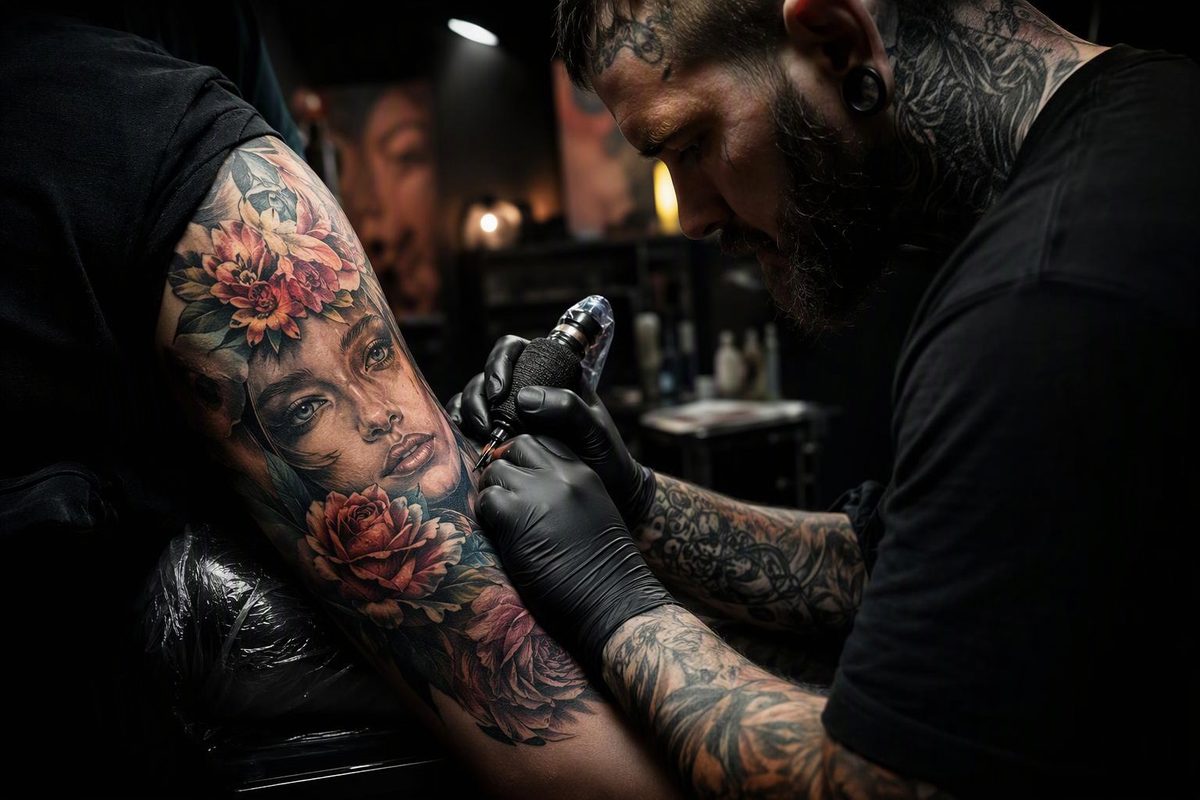
A color realism tattoo uses blended color, light and shadow to make a subject look lifelike: the shine on a beetle’s shell, the folds of a rose, or the familiar expression in a portrait. Its defining feature isn’t simply bright ink. It’s the illusion of form.
If you’re considering one, look for more than a spectacular fresh photograph. The useful questions are whether the artist can render your particular subject, how the design fits your body, and what their work looks like after healing.
What makes it color realism?
Rather than enclosing every shape in a bold outline, realism typically builds edges through changes in tone and color. Gradual shading makes a cheek look rounded; a sharp highlight and dark reflection can suggest polished metal. Brooklyn’s Monolith Studio describes realism through photographic detail, smooth tonal transitions and controlled highlights, with color realism adding the challenge of reproducing hues in skin.
The distinction from black-and-grey realism is the palette, not the ambition to create a convincing likeness. Nor does every realism tattoo need to reproduce an ordinary scene: an impossible composition can still contain realistically rendered faces, flowers or objects. For a wider comparison, see our guide to different tattoo styles.
Color portraiture offers a useful example. Nikko Hurtado’s official biography identifies a Batman color portrait, made after about a year of tattooing, as a turning point in his career. In an iNKPPL interview, Hurtado recalled that the appointment had originally been intended for a black-and-grey Humphrey Bogart portrait before his client requested Batman instead. The subject was fictional; the task was still to make a face convincing in color.
Choose the subject—and leave room for it
A clear reference gives an artist information to work with. Monolith emphasizes well-lit, sufficiently detailed source images rather than blurry or low-resolution photographs. For a memorial or pet portrait, bring the original photo file if you have it, plus alternatives showing the features that matter most.
Think about the focal point before adding a background. Is this a portrait of your dog, or a landscape that happens to include your dog? Those are different compositions.
Useful consultation questions include:
- What size does this image need? Ask the artist to explain which details they would retain, simplify or remove at your preferred scale.
- Where will the focal point sit? Check the proposed layout with the limb relaxed as well as turned toward you.
- What creates the contrast? Ask where the darkest shadows and lightest areas will be, rather than judging the palette by brightness alone.
Treat size as a design decision, not just a price decision. If you want a small piece, ask to see healed examples at a comparable scale—not only the artist’s large portraits.
Skin tone and healed portfolios matter
Your skin is part of the finished palette, not a white sheet beneath it. An Ink & Dagger essay on tattoo color theory explains why fresh and healed ink look different and argues that artists need to understand both. Its author also challenges his own earlier habit of steering darker-skinned clients away from color.
Dark skin does not rule out colorful tattoos. Artist Tiaret Mitchell, interviewed by Allure, emphasizes evaluating undertones and adapting the approach rather than applying one palette to everyone.
Ask for healed work on skin tones similar to yours, ideally with subjects and placements resembling your plan. Look at whether the face, petals or fur remain legible—not just whether individual colors look vivid. Ask how old each photograph is; “healed” and “several years old” answer different questions.
Before you book
Get a project-specific estimate covering expected sessions, billing method and the artist’s touch-up policy. There is no useful universal price for “color realism” without a size, subject and artist attached. Our tattoo cost guide explains the factors to compare.
For long-term care of a healed tattoo, the American Academy of Dermatology says UV light can fade some inks and recommends broad-spectrum, water-resistant SPF 30 or higher. Apply it 15 minutes before going outside and reapply at least every two hours. That is protection, not a promise of permanent photographic sharpness. Choose the artist and composition for the tattoo you’ll wear—not only the photograph taken when it’s finished.