
Find an Idea You’ll Want to Make Your Own
Start with 100+ prompts, then narrow the options by size, color and visibility—whether your choice is story-led or appearance-led.
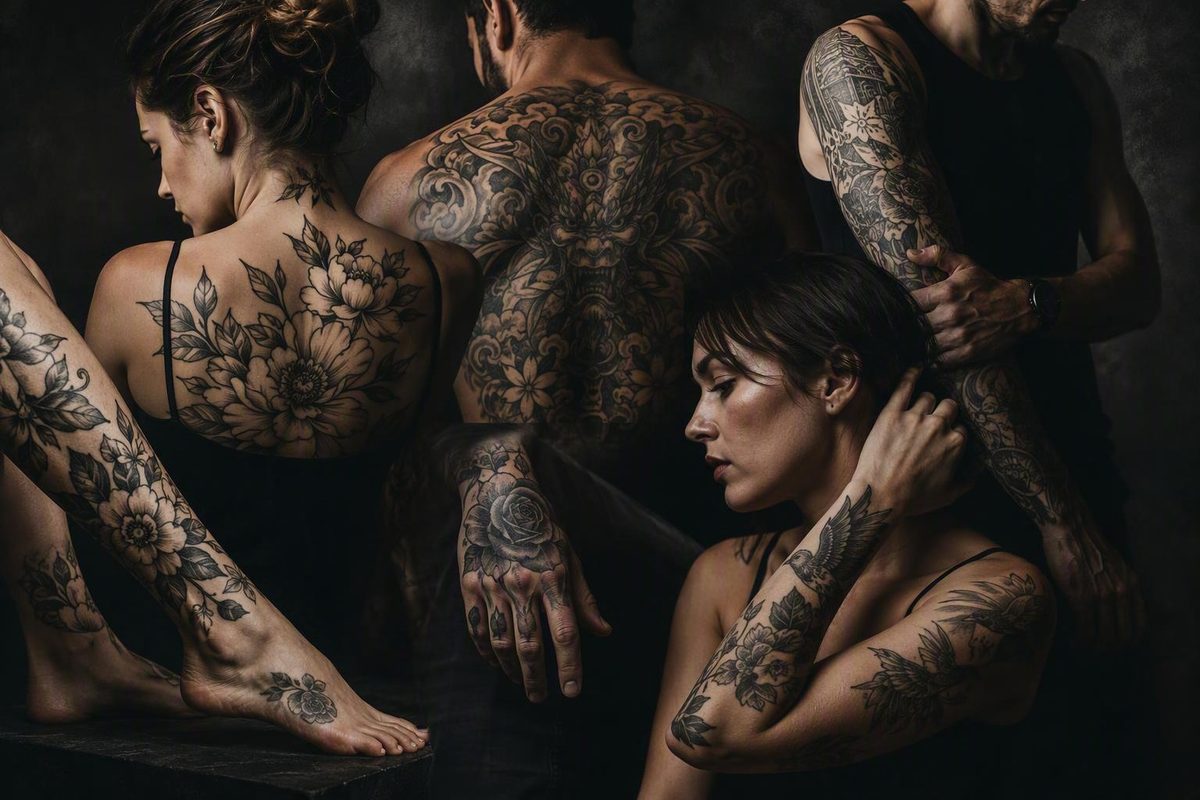
The best tattoo ideas are rarely finished designs waiting to be copied. They are directions: a subject, feeling, visual language, scale, and placement that an artist can shape into something personal.
You might begin with a memory you want to preserve. You might simply love bold roses, delicate lettering, strange creatures, or abstract black shapes. Both are valid. This guide offers more than 100 starting points, then helps you narrow them by meaning, style, size, color, visibility, and placement.
Use the catalogue as a prompt list rather than a set of finished designs. For visual comparison, browse photographs of real tattoos in artist portfolios and established tattoo galleries, noting the artist, source, style, placement, and whether the image shows fresh or healed work where that information is available.
Start Here: A Quick Tattoo Idea Finder
Begin with one of two routes:
- Story-led: Start with a memory, relationship, identity, milestone, place, or value.
- Appearance-led: Start with art you enjoy looking at—no deeper explanation required.
From there, make six decisions:
- Subject: What is pictured?
- Visual style: Should it feel delicate, bold, realistic, graphic, ornamental, or abstract?
- Approximate size: Small, medium, or large?
- Color approach: Black, black-and-gray, restrained accents, or full color?
- Visibility: Always visible, occasionally visible, or usually covered?
- Placement: Which body area offers the right shape and space?
A tattoo can be selected for sentiment, appearance, or both. Community-submitted examples include memorials, milestones, decorative pieces, fandom references, and flash chosen simply because the wearer liked it, including a frog selected without the need for a deeper symbolic explanation (BuzzFeed’s reader tattoo gallery).
| If you are starting with… | Try these motifs |
|---|---|
| Remembrance | Handwriting, a distinctive object, recognizable pet feature, flower, or date |
| Transformation | Butterfly, seedling, sunrise, open door, or snake |
| Freedom | Birds, wings, waves, sailboat, kite, or travel imagery |
| Identity or resilience | Word, mountain, acorn, repaired botanical form, or personal tool |
| Aesthetic enjoyment | Ornament, abstract lines, geometry, botanicals, or classic flash |
These associations are prompts, not definitions. A butterfly does not have to mean transformation, and a rose does not carry one fixed message. Use familiar symbolism if it helps, reinterpret it, or disregard it entirely.
Before saving another hundred images, ask:
- Black-and-gray or color?
- Subtle or bold?
- Visible or concealable?
- Standalone or designed to expand later?
- Small and restrained or large enough for layers and detail?
- Crisp and graphic or soft and tonal?
- Symmetrical, vertical, circular, or flowing?
Style terminology overlaps, and artists do not always use labels identically. Save examples of the qualities you like—line weight, contrast, shading, palette, spacing, and composition—instead of depending on a style name alone.
Tattoo Ideas by Subject: More Than 100 Starting Points
Treat each prompt below as raw material. Change the species, flower, angle, object, expression, palette, or composition until it belongs to you.
When collecting visual references, check what kind of image you are looking at. Stock searches can mix photographs of completed tattoos with vectors, decorative illustrations, mockups, and AI-generated assets, so a search result is not necessarily evidence of how a concept will translate onto skin (Adobe Stock’s mixed “simple tattoo designs” results). Favor clearly attributed photographs of real work when assessing an artist or technique, and identify non-tattoo illustrations as conceptual references.
Florals and botanicals
- Rose: One open bloom, a thorned stem, or petals wrapped around another object.
- Lotus: A centered bloom simplified into layered, symmetrical shapes.
- Sunflower: A face-forward flower with graphic seeds or loose natural detail.
- Wildflower bundle: Several uneven stems arranged like a hand-picked bouquet.
- Birth flowers: Combine flowers linked personally to family members or dates.
- Bleeding-heart flower: A hanging stem whose unusual shape carries the composition.
- Olive branch: A spare curved branch following the body’s contour.
- Acorn: A compact emblem paired with a leaf, roots, or emerging shoot.
- Seedling: Two leaves emerging from soil, a crack, or a personal object.
- Botanical sprig: One local herb, fern, or leafy stem rendered simply.
- Floral bandage: Flowers growing through, over, or around a bandage shape.
- Flowers around an object: Let stems frame a key, book, tool, photograph, or keepsake.
- Herbarium specimen: A labeled botanical study with restrained scientific detail.
- Floral silhouette: Fill an animal, landmark, or letterform with plant shapes.
- Seasonal branch: Blossom, fruit, bare twigs, or autumn leaves tied to a memory.
Animals and creatures
- Cat: A sleeping curve, alert profile, expressive face, or characteristic pose.
- Dog: Use a distinctive stance, collar, expression, or breed feature.
- Pet portrait: Build from a clear photograph that captures recognizable traits.
- Pet-ear outline: Reduce a familiar ear shape to a compact silhouette.
- Paw or marking: Use a paw print, nose pattern, patch, chipped tooth, or other recognizable feature.
- Bird: Perched, singing, diving, or flying through a larger scene.
- Swallow: A compact classic motif that can be paired or framed.
- Butterfly: Explore symmetry, a partial wing, transformation, or decorative pattern.
- Moth: Use broad wings for botanical, celestial, or geometric details.
- Bee: A tiny icon, anatomical study, or central figure among flowers.
- Snake: Coil it around an object or let it follow a limb.
- Tiger: Choose a face, prowling profile, paw, or striped abstraction.
- Lion: Use a portrait, silhouette, mane pattern, or heraldic treatment.
- Eagle: Wings spread, perched profile, talon detail, or graphic head.
- Fish: One fluid silhouette or a pair moving around a circular form.
- Marine life: Jellyfish, ray, octopus, whale, seahorse, coral, or shell.
- Frog with mushroom: A playful scene with room for stylized color.
- Dragon: Serpentine, winged, heraldic, illustrative, or highly simplified.
- Phoenix: Use rising movement, feathers, flame shapes, or an abstract ascent.
- Mythological creature: Griffin, sphinx, mermaid, chimera, or a creature from a tradition meaningful to you.
- Insect study: Beetle, cicada, dragonfly, or mantis arranged like a specimen.
- Quirky animal: A dressed-up raccoon, dancing bear, balloon-carrying penguin, or similarly personal character.
Celestial and nature
- Sun: A simple disk, radiating face, or ornamental solar emblem.
- Sunrise: A horizon line with the first arc of light.
- Moon phases: Arrange phases vertically, horizontally, or around another motif.
- Sun-and-moon pairing: Use complementary shapes rather than identical twins.
- Stars: A sparse cluster, bold nautical form, or ornamental field.
- Shooting star: One strong diagonal with a restrained trail.
- Constellation: Use a checked pattern or reinterpret it as abstract geometry.
- Planet: A ringed silhouette, detailed sphere, or imaginary world.
- Earth: A globe, horizon curve, map fragment, or view from space.
- Clouds: Soft tonal forms, graphic curls, or a frame for another image.
- Lightning: A single angular mark or branching naturalistic strike.
- Waves: One crest, repeating band, or wraparound flow.
- Mountain profile: Reduce a meaningful range to its recognizable contour.
- Forest: A line of trees, path through trunks, or atmospheric scene.
- Ocean scene: Horizon, underwater view, rocky coast, or moonlit water.
- Landscape window: Frame a place inside an arch, doorway, porthole, or rectangle.
- Weather map: Turn wind, rain, clouds, or pressure-like lines into abstraction.
- River route: Trace a meaningful waterway as a flowing linear composition.
Objects and classic motifs
- Heart: Anatomical, symbolic, stitched, flaming, pierced, or ornamental.
- Anatomical heart: Pair observed structure with flowers, machinery, or light.
- Lightbulb: Fill it with a plant, landscape, insect, or abstract glow.
- Open door: Show light, landscape, stars, or darkness beyond it.
- Key: Use the shape of a family key or invent ornate teeth.
- Crown: Reduce it to a graphic emblem or build an elaborate centerpiece.
- Anchor: Keep it classic or pair it with flowers, rope, initials, or water.
- Dagger: Place it through a flower, fruit, heart, book, or abstract form.
- Skull: Human, animal, botanical, anatomical, or playful.
- Nautical star: Use one bold emblem or integrate it into navigation imagery.
- Wings: A pair, single feathered form, tiny icon, or anatomical study.
- Sailboat: A compact silhouette or a boat within a wider seascape.
- Navigation motif: Combine directional geometry, route lines, and a personal destination.
- Jar: Hold fireflies, flowers, waves, clouds, or a miniature memory.
- Magic wand: Pair a personal object with sparks, stars, or botanical flourishes.
- Sunglasses: Reflect a place, person, color field, or private joke.
- Balloon: One floating form, a character carrying balloons, or a letting-go scene.
- Favorite toy: Recreate its worn shape, missing part, or familiar pose.
- Everyday keepsake: A mug, chair, camera, lighter, ticket, or inherited tool.
Students of the Unusual’s American Traditional coverage identifies swallows, nautical stars, pigs, roosters, daggers, and roses as inspiration motifs. Treat these as starting points for a new composition rather than as symbols with one mandatory meaning.
Words and graphic forms
- Single word: Choose one word whose sound and letter shapes both appeal.
- Short quotation: Edit to the essential phrase and test readability.
- Name: Consider handwriting, lettering style, and surrounding imagery.
- Date: Use familiar numerals, Roman numerals, coordinates, or a coded format after checking accuracy.
- Loved one’s handwriting: Scan an original note rather than recreating it from memory.
- Script lettering: Let the rhythm of the letters lead the composition.
- Block lettering: Use weight, spacing, and alignment for graphic impact.
- Geometric pattern: Repeat a shape, build a grid, or interrupt the pattern intentionally.
- Abstract lines: Create movement without assigning a literal subject.
- Scribble: Turn an impulsive mark into a deliberate, balanced composition.
- Ornamental form: Explore arches, filigree, lace-like structure, or mirrored flourishes.
- Negative-space composition: Let untouched skin define the central image.
- Symmetrical emblem: Build a centered design from animals, plants, or invented forms.
- Personal monogram: Interlock initials without making legibility the only goal.
- Diagram: Adapt a meaningful process, mechanism, or conceptual map.
Life, hobbies, and places
- Books or bookshelf: Show one open book, a leaning stack, or a personal shelf.
- Fountain-pen nib: Add an ink trail that becomes words, flowers, or scenery.
- Dress form: Pair it with thread, fabric shapes, scissors, or a garment.
- Musical notation: Check the exact notes and rhythm before tattooing.
- Lyric reference: Translate a lyric into an object or scene instead of text.
- Career tool: Choose the instrument that best represents the work to you.
- Travel souvenir: Abstract a ticket, stamp, tile, shell, or found object.
- Skyline: Select only the buildings that make the place recognizable.
- Map contour: Use a route, border, island, neighborhood, or topographic line.
- Airplane-window view: Frame clouds, a coast, city lights, or mountains.
- Local plant: Use flora connected to home or a meaningful destination.
- Meaningful building: Focus on its doorway, roofline, sign, or window.
- Food: Choose a family dish, regional ingredient, snack, or celebratory meal.
- Sport: Use equipment, field markings, movement, or a subtle tactical diagram.
- Inside joke: Translate the joke into an image that still works visually.
- Craft tool: Needle, brush, chisel, whisk, loom, or instrument in use.
- Home object: A porch light, doorknob, wallpaper pattern, or kitchen table.
Art, entertainment, and fandom
- Artwork-inspired composition: Borrow mood, palette, or compositional logic rather than tracing the artwork.
- Comic reference: Reimagine a gesture, prop, panel rhythm, or sound effect.
- Animation motif: Focus on a silhouette, object, environment, or movement.
- Film motif: Use a meaningful prop, location, costume detail, or visual theme.
- Television reference: Convert a recurring object or line into a private emblem.
- Literary image: Build from a setting, metaphor, creature, or personally significant edition.
- Music reference: Use an instrument detail, stage object, waveform, or abstract response to a song.
- Original character tribute: Ask for a new composition rather than a direct reproduction.
- Genre collage: Combine motifs from horror, fantasy, science fiction, romance, or noir into one coherent scene.
For references drawn from stock libraries, photographs, fandoms, or existing artwork, record where each image came from and check its stated terms, attribution information, and the tattoo artist’s policy. When those details are unclear, use the image to communicate broad qualities rather than requesting a duplicate.
Tattoo Ideas by Meaning, Memory, and Mood
Meaning becomes useful when it generates specific visual choices. Instead of asking, “What symbolizes resilience?” ask, “What object, place, action, or image reminds me of the moment I became more resilient?”
Memorial ideas
Consider:
- A checked sample of a loved one’s handwriting
- A voice-waveform concept based on a personal recording
- Their distinctive flower or garden plant
- A familiar hand gesture
- A cherished object, tool, chair, mug, or piece of jewelry
- A date in a checked format
- A pet portrait from a clear photograph
- A pet-ear outline, paw detail, or recognizable marking
- A favorite toy associated with a person, child, or animal
Personalize the composition by choosing the exact sample, object, angle, date, color, or feature. A generic dog outline becomes specific when one ear rises and the other folds; a generic flower becomes personal when it is based on the plant outside a family home.
Relationship ideas
Paired tattoos need not be identical. Two people might choose complementary flowers, neighboring parts of a map, two views of the same place, related objects, or separate halves of a visual joke. A family piece could show favorite flowers held by a familiar hand; friends might choose different characters from one shared memory.
Specify what connects the designs: matching line weight, palette, shape, placement, or one repeated detail. That gives each wearer an individual tattoo while retaining the relationship.
Identity, resilience, and turning points
Possible prompts include a chosen word, open door, sunrise, mountain, seedling, acorn, butterfly, repaired botanical form, or a personal object associated with a decisive moment.
Personalization matters more than selecting the “correct” symbol. Replace a generic mountain with the contour of one you climbed, or let a seedling emerge from an object connected to the period you want to remember.
Freedom and adventure
Try a singing bird, wings, waves, sailboat, kite, road, route, map contour, mountain profile, travel-window view, or local flora from a meaningful destination. Add a precise shoreline, road bend, plant, transit line, or remembered view.
Luck, wonder, and possibility
A four-leaf clover, shooting star, celestial scene, lightbulb, magic wand, or private talisman can express hope or curiosity if that association feels right to you. An illustrator’s small-symbol idea collection, for example, explicitly presents its meanings as personal interpretations that readers may change.
Playful or purely aesthetic ideas
A frog beneath a mushroom, penguin with balloons, oddly dressed animal, botanical flow, abstract shape, ornament, or flash design needs no solemn backstory. Visual pleasure can be the reason.
Make the concept yours through an exact palette, expression, pose, plant, prop, or placement. “A colorful frog” is a category; “a sleepy tree frog sheltering beneath a mushroom like the ones in my childhood garden” is a brief.
See the Same Idea in Different Tattoo Styles
A subject is only half the decision. The same rose can feel quiet, forceful, lifelike, decorative, or strange depending on its visual treatment.
One rose, eight directions
- Fine line: Thin, precise contours with restrained interior detail and open space.
- American Traditional: Bold outline, strong contrast, limited palette, and simplified readable shapes.
- Realism: Tonal shading, texture, gradients, and close observation of petals and light.
- Blackwork: Solid black shapes balanced against deliberate negative space.
- Neo-traditional: Prominent outlines with richer color, ornament, detail, and layered shading.
- Minimalist: Only the essential contour, stem, or petal gesture.
- Geometric: Petals reconstructed through circles, facets, symmetry, or intersecting lines.
- Etching: Fine hatching, cross-hatching, and stippling that suggest an engraved illustration.
A split-style rose is a useful comparison because line-led and shading-led treatments produce visibly different readings from the same subject. The drawing and application approach may also change rather than simply receiving a different style label.
Style comparison
| Approach | Line and contrast | Detail and shading | Palette | Overall read |
|---|---|---|---|---|
| Fine line | Thin, precise, often light | Restrained to intricate | Black, gray, or color | Delicate, airy |
| American Traditional | Bold outline, strong contrast | Simplified forms and controlled shading | Usually limited | Graphic, immediate |
| Realism | Form may rely on tonal edges | Gradients, texture, close observation | Black-and-gray or color | Lifelike, dimensional |
| Microrealism | Fine, compact structure | Selected realistic detail | Black-and-gray or color | Small-scale realism |
| Blackwork | Solid black and negative space | Graphic pattern or texture | Black | Bold, high-impact |
| Neo-traditional | Prominent outlines | Rich detail and intricate shading | Often expansive | Ornate, illustrative |
| Etching | Fine directional lines | Hatching and stippling | Usually restrained | Engraved, antique |
| Minimalist | Few essential lines or shapes | Little detail | Usually restrained | Spare, quiet |
| Abstract | Variable | Gesture, texture, or nonliteral forms | Any | Expressive, open-ended |
| Geometric | Precise repeated edges | Pattern, symmetry, calculated spacing | Any | Structured, ordered |
| Lettering | Defined by letterform and spacing | Optional shadows or flourishes | Any | Verbal, typographic |
| Anime-inspired | Clean illustrative contours | Stylized expressions and motion | Black-and-gray or color | Graphic, character-led |
| Black-and-gray | Any compatible line weight | Values built from black and gray | No full-color palette | Tonal, restrained |
| Color | Depends on the underlying style | Flat, blended, or painterly | Restricted or broad | Vivid or nuanced |
Fine line is commonly described through thin, precise linework used for florals, script, minimalism, portraits, and geometric detail. Some practitioners treat it as a technique that can cross several styles rather than as a single self-contained style. Blackwork is similarly broad and may include geometric, abstract, illustrative, and—in some practitioners’ usage—dotwork approaches. A commercial style guide written by Annika Hugosson and illustrated with tattoo artist Brian Parrillo’s work shows how fine line, realism, microrealism, and blackwork can overlap (style comparison).
Realism aims for lifelike form through tonal shading, gradients, texture, and fine detail, often for portraits, animals, and nature. Microrealism applies a related goal at a smaller scale, making the selection of essential details especially important. An artist should assess whether a requested face, pet, or object remains identifiable at the proposed scale.
American Traditional favors bold outlines, strong contrast, a limited palette, and classic motifs. Explore the site’s dedicated American Traditional guide for its visual vocabulary, then compare artist portfolios instead of treating claims about durability or aging as guarantees.
Neo-traditional retains prominent outlines while allowing richer color, more detail, and intricate shading. Etching seeks the appearance of an old engraving through fine lines, cross-hatching, and stippling. Compare the visible qualities and the artist’s relevant work.
Choose a Size and Placement That Serve the Design
Do not choose a design in isolation and look for somewhere to put it afterward. Shape, complexity, scale, visibility, body contour, movement, clothing coverage, and possible future expansion should be considered together.
Start with the design’s shape
- Vertical concepts: Spine, forearm, calf, or elongated torso space can suit stems, swords, snakes, quotations, falling stars, and stacked imagery.
- Circular or compact concepts: Shoulder, upper arm, thigh, or calf can suit animal heads, suns, flowers, emblems, and contained scenes.
- Symmetrical concepts: A body center line can reinforce mirrored ornamental, winged, botanical, or geometric forms.
- Wraparound or flowing concepts: Limbs can host snakes, vines, waves, ribbons, repeating ornament, and connected scenes.
These are starting relationships, not rules. The artist should test how the actual composition follows your anatomy.
Browse placements with a purpose
People often browse finger, hand, forearm, upper arm, sleeve, neck, back, spine, thigh, calf, and full-leg tattoos. Ask instead:
- How visible should it be in ordinary clothing?
- Do you want to see it yourself without a mirror?
- Does the area provide the width or length the design needs?
- Could the tattoo expand into a sleeve, back piece, or larger composition later?
- How does its orientation change when your body moves?
- What parts of your normal routine should the artist know about?
Tattoo artist Bang Bang identifies movement, sun exposure, skin condition, design, placement, and technique as variables that can influence how a tattoo changes over time; treat these as discussion points rather than predictions for a particular tattoo (British Vogue’s interview).
Match scale to complexity
- Small: A restrained icon, short word, simplified outline, or single symbol.
- Medium: More layering, shading, secondary elements, or controlled texture.
- Large: Portraits, landscapes, complex realism, back pieces, sleeves, and multi-element scenes.
Tightly spaced lines and intricate features may require enlargement or simplification, but there is no universal minimum dimension.
A detailed pet portrait generally asks for more space than a pet-ear outline. A landscape with foreground, mountains, and sky needs a different canvas from one mountain contour. A long quotation requires more extensive readability checks than a single word.
Print the concept at several sizes or make a temporary mockup. Check it while standing and sitting, with ordinary clothing, from nearby and farther away. Compare orientation, proportion, visibility, and how it follows the intended area. One commercial planning guide recommends temporary tests for comparing placement and scale, although the publisher also sells temporary tattoos (TattoosWizard’s planning guide).
Turn Inspiration Into an Original Tattoo Brief
A useful reference board does not say, “Copy this.” It says, “These are the repeated qualities I want.”
A five-step workflow
- Collect a focused set of references. Include tattoos and non-tattoo imagery.
- Label what appeals in each. Be specific: “open spacing,” “heavy outer contour,” “muted green,” or “off-center composition.”
- Identify recurring traits. Look for repeated subjects, line weights, contrasts, palettes, and shapes.
- Remove conflicts. If half the board is delicate and sparse while half is dense and graphic, decide whether that contrast is intentional.
- Write a short brief. State what must remain, what can change, and what to avoid.
Useful mood-board labels include:
- Subject
- Composition
- Line weight
- Contrast
- Shading
- Palette
- Scale
- Placement
- Orientation
- Must-keep details
- Details to avoid
References can come from tattoo portfolios, photographs, paintings, decorative art, architecture, landscapes, household objects, books, films, music, animals, or personal archives. Non-tattoo sources can help prevent your board from becoming only a collection of other people’s finished tattoos.
Inspiration is not replication
Ask the artist to identify recurring traits and combine them with your personal source material in a new composition. A design-selection guide from Bang Bang Body Arts similarly encourages references from photographs, paintings, hobbies, relationships, and personal objects while discouraging direct copying and emphasizing adaptation to the body (design-selection guidance).
Five ways to transform a generic idea
- Generic rose → personal botanical arrangement: Replace the rose with specific birth flowers and let them grow around an inherited key, watch, or tool.
- Generic pet icon → recognizable portrait shorthand: Use the outline of your pet’s ears and include one asymmetric marking.
- Generic travel tattoo → place-specific composition: Put a local plant inside the checked contour of a meaningful route, island, or neighborhood.
- Generic book tattoo → personal shelf: Choose titles, spine shapes, notes, and objects tied to your reading history.
- Generic celestial tattoo → particular sky: Link the scene to a place or date, and check astronomical details if factual accuracy is important to the concept.
Rights, provenance, and context
For stock artwork, photographs, fandom images, existing art, and AI-generated material, keep a record of where each reference came from. Check the source’s stated licence or usage terms, available attribution and provenance information, and the tattoo artist’s policy before treating an image as reproducible. If the status is unclear, use it only to describe general qualities such as palette, mood, silhouette, or composition.
If a motif comes from a cultural or religious tradition you do not know well, make context part of the research process. Ask what the image represents, how it is used, and whether a knowledgeable person or practitioner can help you understand it before you decide whether it belongs in your brief.
Bring your concept and desired effect, but leave room for the selected artist to solve spacing, flow, contrast, and anatomy. Creative latitude does not remove your approval: review the final design and stencil before tattooing begins.
Choose the Artist, Not Just the Image
The artist is part of the design decision. Select someone whose portfolio demonstrates the style, subject complexity, scale, and placement you need—not merely someone nearby or immediately available.
A strong American Traditional portfolio does not automatically demonstrate expertise in portrait realism, tiny lettering, graphic blackwork, or microrealism. Compare relevant work and look for consistency across several tattoos. Where available, examine healed examples rather than relying only on fresh photographs.
For a large, detailed, unusual, or emotionally sensitive concept, arrange a consultation. Portfolio research, healed examples, consultations for complex work, and careful checks of text and landmarks are also emphasized in Tattoodo’s pre-tattoo mistakes checklist.
Consultation checklist
Bring or discuss:
- The subject and must-keep details
- Your reference board
- Approximate size
- Exact placement and orientation
- Black-and-gray, restrained color, or full color
- Desired visibility
- Budget parameters
- Your tolerance for the proposed appointment structure
- The artist’s revision process
- The likely number of appointments as an artist-specific estimate
- Possible future expansion
- Elements that may be simplified, enlarged, reoriented, or removed
Ask directly: Does this concept need more space, wider spacing, stronger contrast, or a different orientation for this placement?
Before approving the stencil, verify:
- Spelling
- Names
- Dates
- Quotations
- Musical notation
- Coordinates and map contours
- Landmarks
- Orientation
- Mirrored elements
- Handwriting
- Pet and portrait features
- Every detail central to the meaning
Ask the studio which licensing, hygiene, consent, and aftercare requirements and practices apply in its location. Direct personal questions about allergies, medications, skin conditions, scars, abnormal scarring, infection, or healing to qualified tattoo and healthcare professionals. Prices, pain experiences, appointment lengths, and the number of sessions vary, so seek estimates for your particular artist, design, placement, and location.
A Final Pre-Booking Checklist
Pause before paying a deposit or confirming the final design.
- [ ] I still like the idea after spending time away from my mood board.
- [ ] The tattoo works for me even if it has no deeper symbolic meaning.
- [ ] The artist’s portfolio matches the visual approach I want.
- [ ] I have looked for relevant healed examples where available.
- [ ] I have confirmed the subject, composition, line weight, contrast, and shading.
- [ ] I have chosen a black-and-gray or color approach.
- [ ] I have confirmed scale, placement, orientation, and visibility.
- [ ] I have checked spelling, dates, quotations, handwriting, locations, musical details, and identifying features against reliable originals.
- [ ] I have told the artist which references are tattoos, photographs, stock assets, illustrations, or AI-generated images.
- [ ] I have checked unresolved licence, provenance, attribution, fandom, and cultural-context questions.
- [ ] I have tested size and placement with a printout or temporary version where practical.
- [ ] I have discussed detail, spacing, body contours, appointments, budget, revisions, future expansion, and aftercare.
- [ ] I have raised allergy, medication, skin, scar, or other medical concerns with appropriate qualified professionals.
- [ ] I have reviewed and approved every important detail in the final stencil.
Copy this brief:
I want [subject] because [meaning or aesthetic], in a [visual qualities/style] treatment, approximately [size], on [placement], using [color approach], with [personal details], while avoiding [details].
Frequently Asked Questions
What is a good first tattoo idea?
A good first tattoo is one you can describe clearly and assess practically. Consider a restrained icon, short word, simplified botanical, recognizable pet feature, small piece of flash, or another concept with a clear silhouette.
Choose the subject first, then ask an artist whether the detail, size, and placement work together. Testing a printed or temporary version can help you judge visibility, orientation, and proportion.
Does a tattoo need to have a deep meaning?
No. A tattoo may commemorate a person or milestone, express identity, or carry a private association, but it can also be chosen because you enjoy the artwork. Meaning can emerge later, change over time, or remain simply, “I like how this looks.”
How do I make a common tattoo idea feel original?
Replace generic details with specific ones. Turn a rose into a particular flower from a family garden, a dog icon into your pet’s uneven ears, a mountain into an exact profile, or a book into a shelf of significant titles.
Then ask the artist to create a new composition from your references rather than reproduce a finished tattoo.
How do I choose between fine line, Traditional, realism, and blackwork?
Compare visual qualities rather than relying on labels alone:
- Choose fine line if you are drawn to thin, precise, airy work.
- Choose American Traditional if you want bold outlines, strong contrast, simplified forms, and a limited palette.
- Choose realism if lifelike texture, observation, and tonal depth matter.
- Choose blackwork if you prefer solid black, negative space, and graphic impact.
Because these terms can overlap, show artists visual examples and select someone with relevant portfolio work.
Should I copy a tattoo image I found online?
Use the image to identify what you like—perhaps the composition, line weight, palette, spacing, or subject—but ask for a new adaptation. Record the source, add personal reference material, and let your artist develop a tattoo that fits your body and brief. If the image’s usage terms or provenance are unclear, do not assume that saving it answers those questions.
The best tattoo idea is a direction, not a finished internet image. Choose a subject or feeling, compare how it behaves across styles, test its scale and placement, and personalize it with details that belong to you. Then take a concise brief to an artist whose portfolio demonstrates the right fit.
Before committing, pause once more for reference provenance, cultural context, stencil accuracy, and any qualified health or studio guidance you need.